

Choosing the Right Decking Cleaning Company: 10 Tips
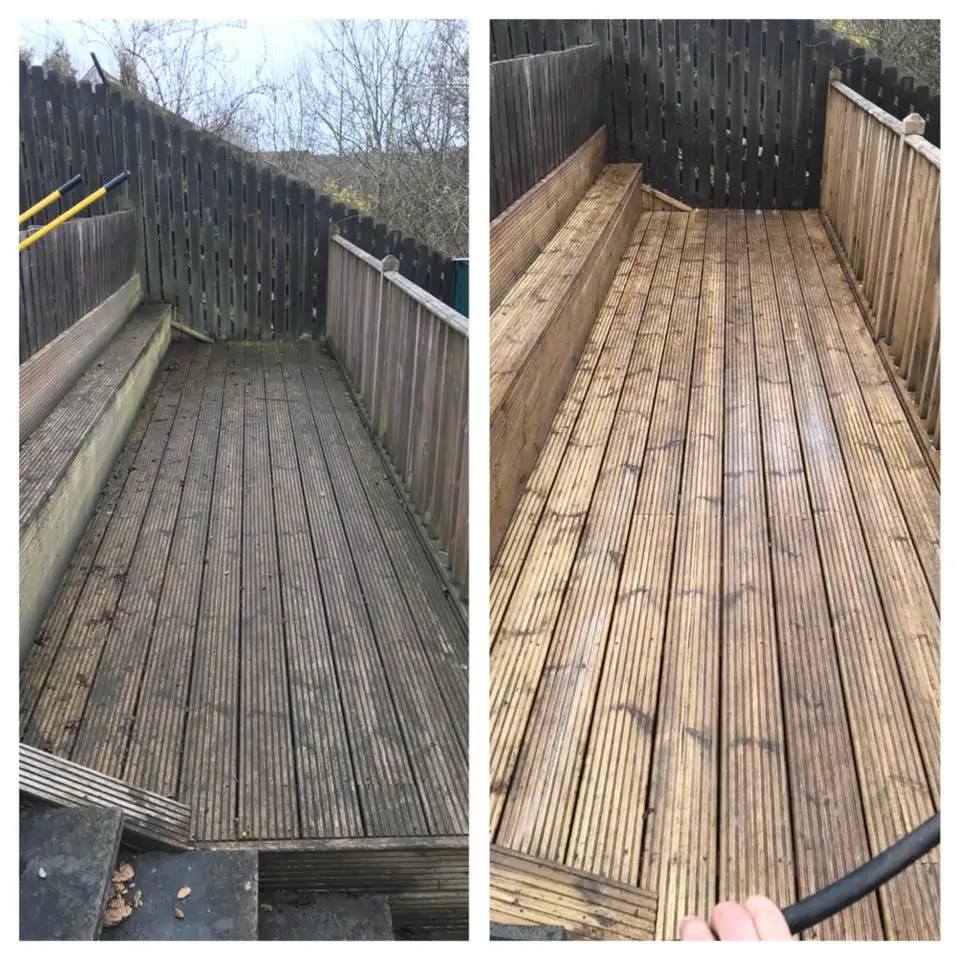
Choosing the Right Decking Cleaning Company: 10 Things Every Homeowner Should Check
Your decking is constantly exposed to the Scottish weather. Over time, rain, damp conditions and changing temperatures can cause timber and composite decking to accumulate dirt, moss, algae, lichen and general grime. These can leave your outdoor space looking tired, discoloured and potentially slippery underfoot.
Professional decking cleaning can help restore the appearance of your outdoor space, remove accumulated dirt and organic growth, and keep your decking looking well maintained. However, choosing the right decking cleaning company is just as important as deciding to have the work carried out.
Different decking materials require different cleaning methods. Using excessive pressure or unsuitable cleaning products can damage timber fibres, strip protective coatings, cause surface splintering or affect the finish of composite decking.
With different cleaning methods, prices and treatments available, how do you know which decking cleaning company to trust?
Here are 10 important things to check before choosing a professional decking cleaning contractor.
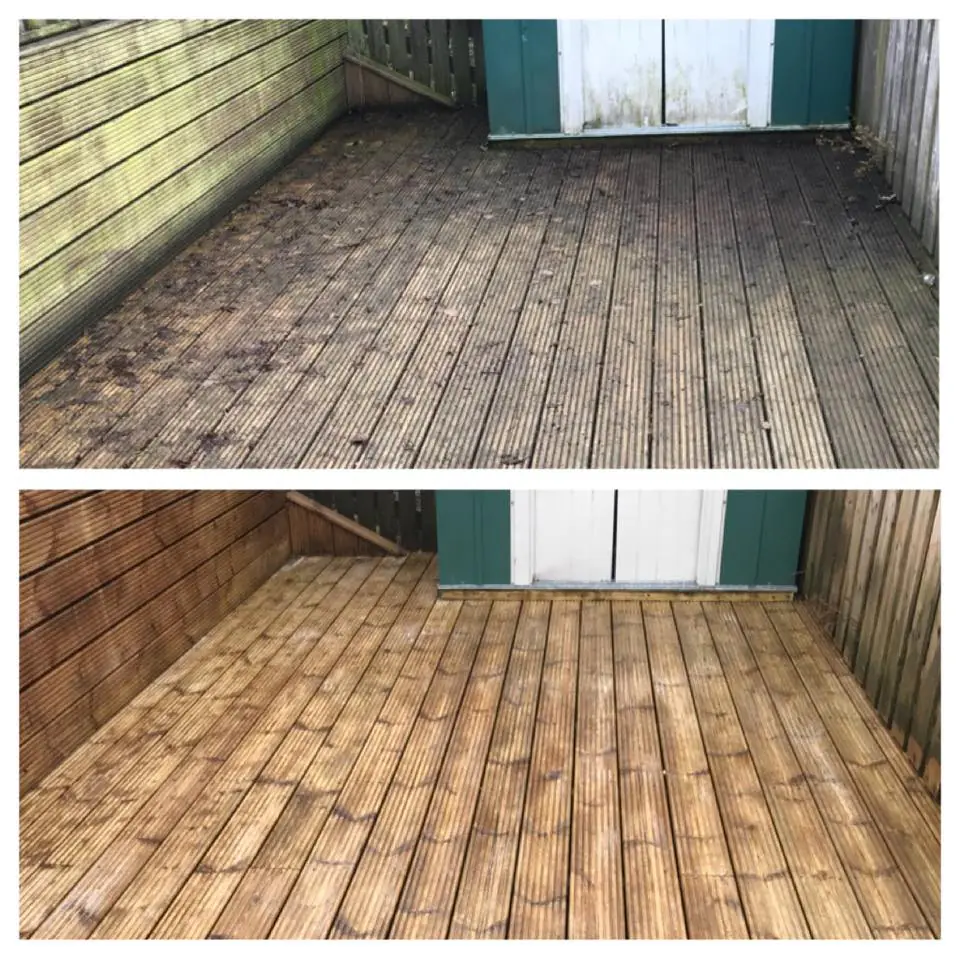
1. Check Their Experience and Reputation
Decking cleaning involves more than simply pointing a pressure washer at a dirty surface. A professional contractor should understand how different decking materials respond to cleaning and which techniques are appropriate for achieving a good finish without causing unnecessary damage.
Look for a company with experience cleaning the type of decking you have, whether it is softwood, hardwood, pressure-treated timber or composite decking.
Before booking, check customer reviews and look at examples of previous decking cleaning projects.
You can search Google for:
- “[Business name] reviews”
- “[Business name] [location] reviews”
- “[Business name] decking cleaning reviews”
- “[Business name] decking cleaning before and after”
Pay attention to feedback about the quality of the finished work, reliability, communication and how carefully the contractor treated the property.
Before-and-after photographs can also help you assess the company’s experience with decking similar to yours.
Look for examples showing the whole deck rather than just a small section. Check whether the finished surface looks consistent and whether the contractor has taken care around railings, steps, edges and other detailed areas.
A reputable contractor should be happy to explain its experience and answer your questions before providing a quotation.

2. Make Sure They Have Suitable Insurance
Decking cleaning involves water, specialist equipment and, in some cases, cleaning chemicals or additional surface treatments. Work may take place near windows, doors, garden furniture, fencing, planted borders and neighbouring properties.
Before agreeing to any work, ask the contractor to confirm its current insurance cover.
Depending on the services provided, relevant insurance may include:
- Public liability insurance.
- Employers’ liability insurance where legally required.
- Appropriate cover for subcontractors, where applicable.
- Cover for accidental damage associated with the cleaning work.
- Suitable cover for cleaning chemicals or specialist treatments, where relevant.
Insurance policies differ, so do not assume that every contractor is covered for all decking cleaning methods, chemical treatments or restoration work.
Ask whether the proposed work falls within the scope of the company’s insurance, particularly if it involves hardwood decking, composite materials, protective coatings or specialist cleaning products.
A professional decking cleaning company should be able to explain its insurance arrangements before work begins.
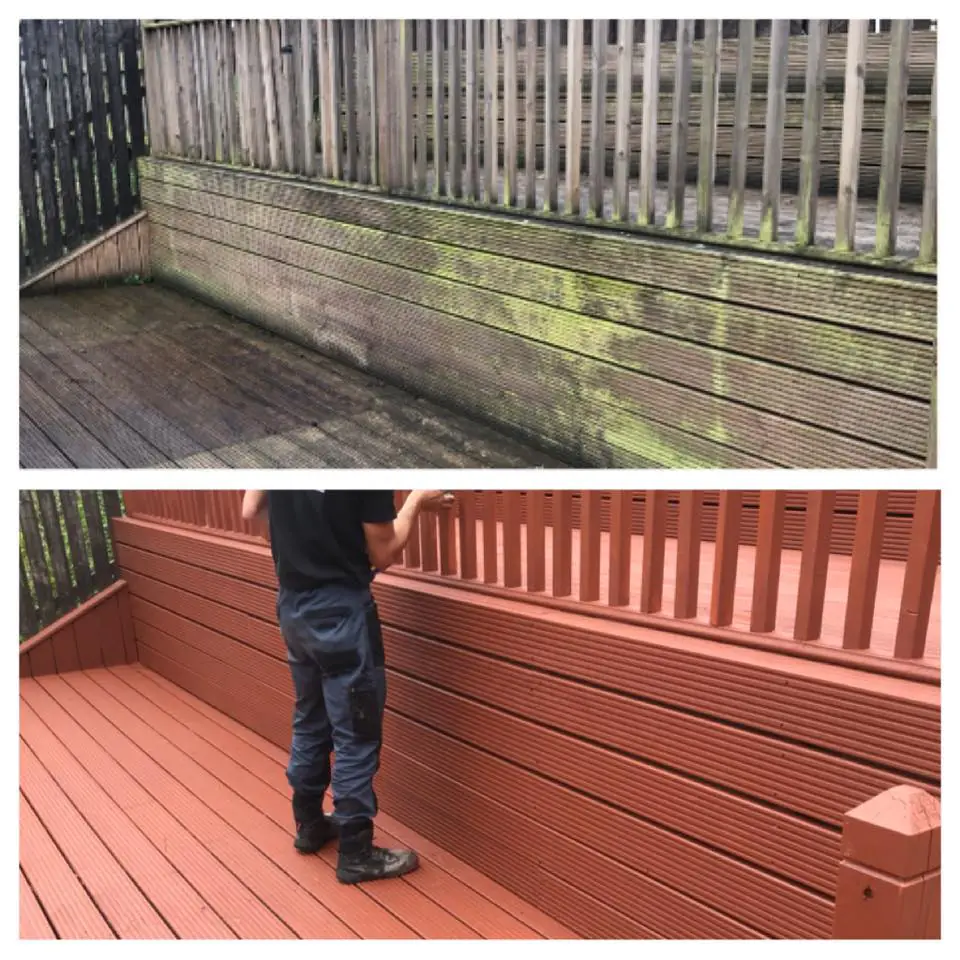
3. Ask Which Decking Cleaning Method They Use
Pressure washing & softwashing can be effective for cleaning suitable decking, but excessive pressure or an unsuitable technique can cause significant damage.
Potential problems include:
- Splintering or roughening timber fibres.
- Creating visible stripes or uneven cleaning marks.
- Damaging softer timber surfaces.
- Removing protective coatings or existing finishes.
- Forcing water into vulnerable joints and gaps.
- Affecting certain composite decking finishes.
- Leaving the deck looking patchy or inconsistent.
The risks depend on the material, its condition, the equipment used and how the cleaning is carried out.
Ask the contractor how they will select the appropriate pressure, nozzle and cleaning equipment for your decking.
They should also explain whether the surface is suitable for pressure washing or whether a gentler method would be more appropriate.
If your decking is old, weathered, cracked or already splintering, it is particularly important to assess its condition before cleaning begins.
A careful contractor will prioritise the condition of the decking rather than trying to achieve the fastest possible result.
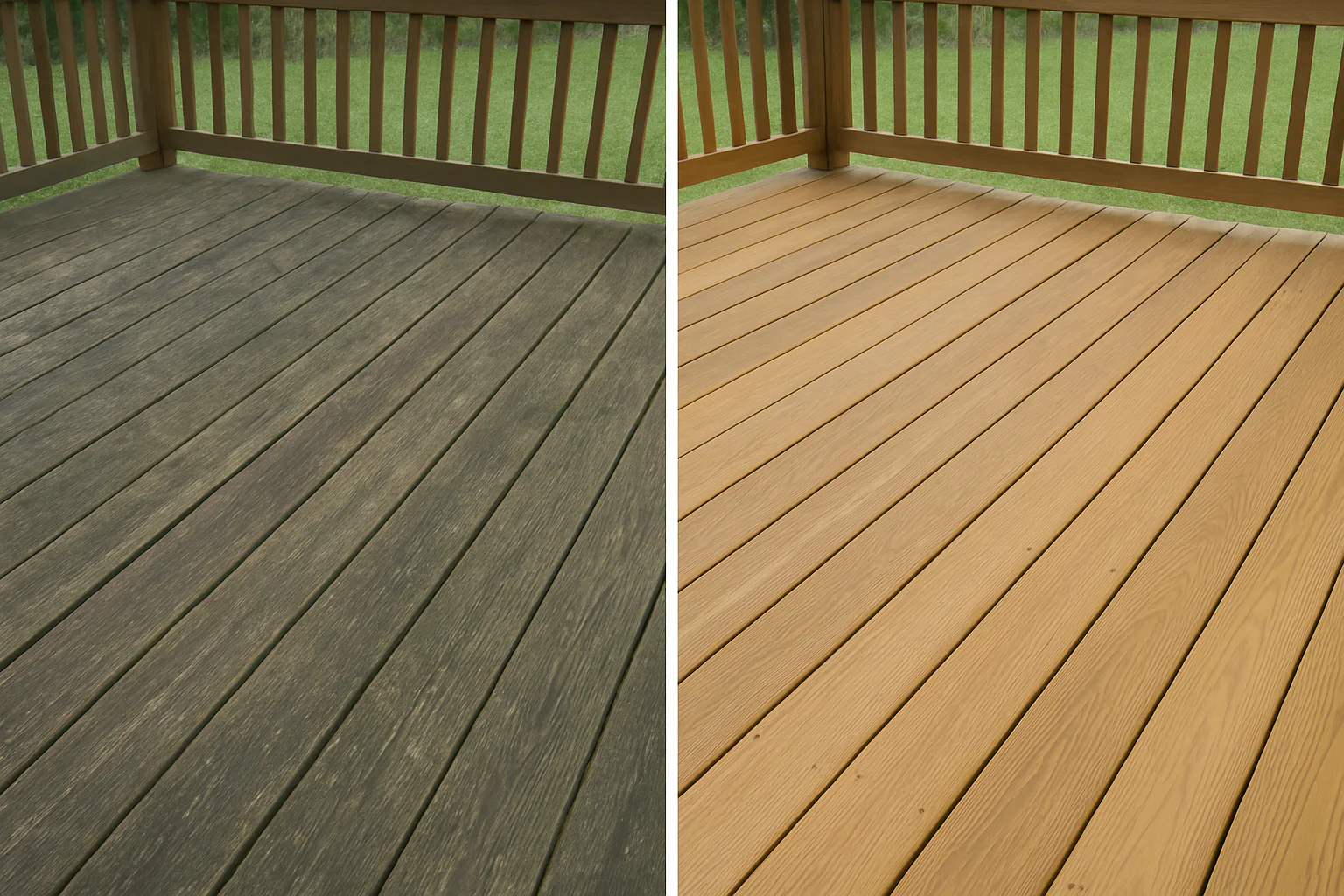
4. Make Sure They Understand the Risks of Excessive Pressure
Although pressure washing can be effective for patio cleaning, excessive pressure or an unsuitable technique can cause problems.
Potential issues include:
- Eroding or damaging the surface of certain types of natural stone.
- Removing or loosening jointing sand between paving slabs.
- Damaging mortar joints or pointing.
- Leaving visible cleaning stripes or uneven patches.
- Forcing water into vulnerable joints or beneath loose paving.
- Damaging existing sealants or protective coatings.
These risks depend on the paving material, its condition, the equipment used and how the cleaning is carried out.
Ask the contractor how they will select the appropriate pressure, nozzle and cleaning equipment for your patio.
They should also explain whether any pointing or jointing materials may need attention after cleaning.
A careful contractor will prioritise the condition of your paving rather than trying to achieve the fastest possible result.
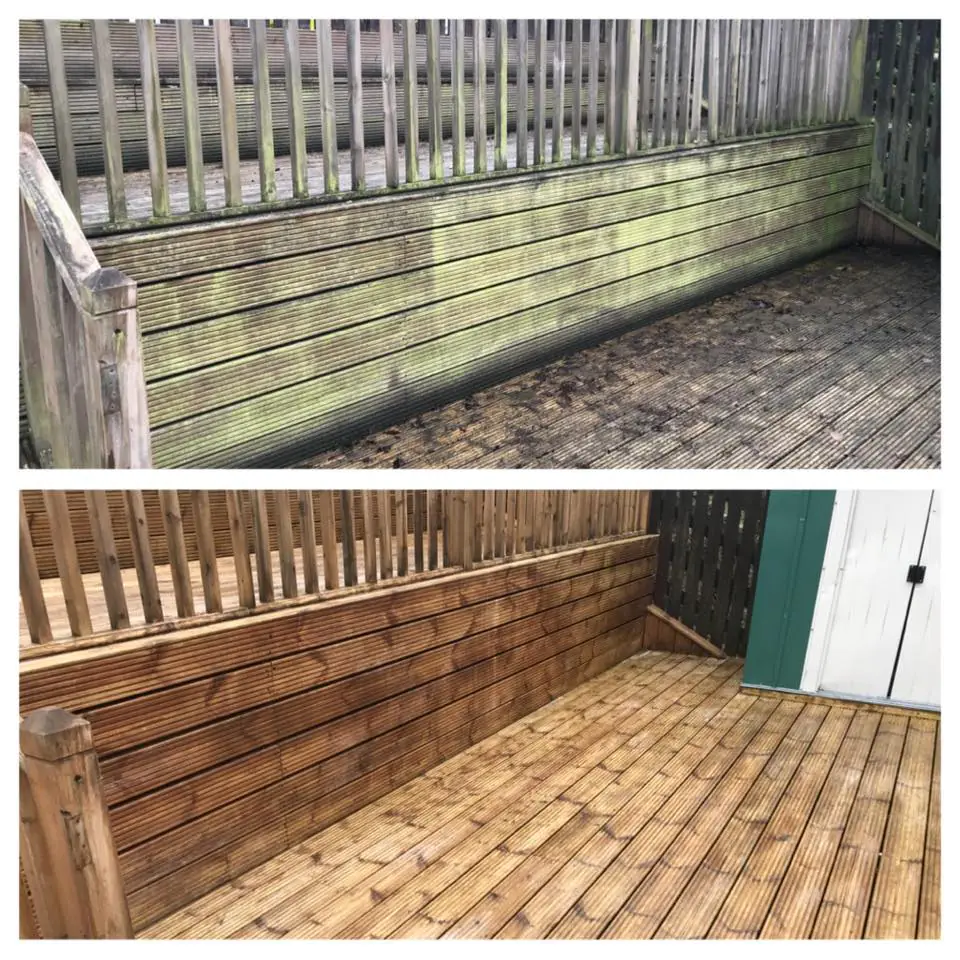
5. Look at Before-and-After Patio Cleaning Photographs
Before-and-after photographs are a useful way to assess a decking cleaning company’s previous work.
Look for genuine examples showing the same deck before cleaning and after the job has been completed.
Pay attention to the consistency of the finish. Has the dirt and algae been removed evenly? Are there visible stripes, missed areas or signs of damage? Have the edges, steps and spaces around railings been cleaned carefully?
Try to find examples involving decking materials similar to yours. A company experienced in cleaning traditional timber decking may have different experience from one that regularly works with composite boards.
Photographs can also help you understand the results that may be achievable on decking that has become weathered or discoloured.
Remember that cleaning does not necessarily restore timber to its original colour. Natural ageing, UV exposure, weathering and previous treatments can all affect the finished appearance.
Composite decking can also develop staining or discolouration that may not be completely removable.
Lighting, wet surfaces and camera angles can influence how clean a deck appears in photographs.
However, previous projects combined with independent customer reviews can give you a better understanding of the contractor’s experience and attention to detail.
6. Get a Clear, Written Patio Cleaning Quotation
Decking cleaning prices can vary depending on the size of the deck, its material, accessibility, the amount of dirt and algae present, and whether additional treatments are required.
A written quotation should clearly explain which areas will be cleaned and what the service includes.
Before accepting a price, check whether the quotation covers:
- Cleaning of the agreed decking area.
- Removal of dirt, moss and algae where reasonably achievable.
- Cleaning of steps, edges and accessible detailed areas.
- Appropriate treatment of specific stains, where agreed.
- Reasonable protection of surrounding surfaces and garden features.
- Management of water runoff and loosened debris.
- Removal of accumulated dirt after cleaning.
- Cleaning of railings or balustrades, if included.
- Application of decking oil, stain or protective products, if agreed.
- Any additional treatments or optional services.
Not every decking cleaning company includes sanding, staining, oiling or sealing as standard, so establish exactly what you are paying for.
Cleaning and restoration are different services. If you want your timber decking re-oiled or stained after cleaning, ask whether this is included or quoted separately.
A very cheap quotation may exclude important parts of the job, while the most expensive company is not automatically the best.
Compare the proposed work, cleaning methods, insurance, experience and customer feedback alongside the price.
7. Ask About Cleaning Products and Additional Treatments
Some decking requires more than water alone to achieve a satisfactory result.
Depending on the material and the type of contamination, a suitable cleaning product or specialist treatment may help remove organic growth, accumulated grime or certain types of staining.
Ask the contractor whether they intend to use cleaning chemicals, algae treatments, timber cleaners or protective products and why they are necessary.
A professional should consider whether the products are compatible with your decking material, existing finishes and surrounding garden environment.
They should also explain any relevant precautions concerning:
- Plants, lawns and garden borders.
- Nearby ponds and water features.
- Surface drainage and runoff.
- Timber oils, stains and protective coatings.
- Composite decking finishes.
- Pets and people using the garden.
Where chemical treatments are used, the contractor should follow the manufacturer’s instructions and take appropriate precautions.
If you have composite decking, ask whether the proposed product is suitable for the particular board material and finish.
Be cautious of companies that recommend expensive additional treatments without explaining their purpose, cost or limitations.
You should understand what each treatment is intended to achieve before agreeing to it.
8. Check How They Work Safely
Decking cleaning involves water, specialist equipment, hoses and surfaces that may become slippery during the cleaning process.
Appropriate safety precautions are particularly important when working on raised decks, steps, balconies or decking close to garden access routes and electrical fittings.
Ask the contractor how they plan to manage the work area and reduce the risks involved.
Depending on the job, suitable precautions may include:
- Keeping people away from the immediate cleaning area.
- Using appropriate protective equipment.
- Managing hoses and cables to reduce trip hazards.
- Taking care around outdoor sockets, lighting and electrical fittings.
- Protecting nearby windows, doors and garden furniture.
- Controlling spray and water runoff.
- Taking additional care around raised decking and steps.
- Following the instructions for any cleaning products used.
Wet timber and composite decking can become slippery, particularly when moss and algae have been disturbed.
The contractor should take this into account throughout the cleaning process and leave the area in a suitable condition when the work is finished.
A professional company should be able to explain its safety arrangements rather than relying solely on experience.
9. Make Sure They Protect Your Garden and Surrounding Property
Decking cleaning can loosen substantial amounts of dirt, moss, algae and other debris. Water and cleaning residues may also spread onto surrounding areas if the work is not managed properly.
Ask the contractor what steps they will take to protect the rest of your property.
A professional decking cleaning company should consider:
- Protecting vulnerable doors, UPVC windows and exterior finishes.
- Taking care around garden furniture, barbecues and outdoor decorations.
- Protecting plants and garden borders where necessary.
- Avoiding unnecessary splashing onto neighbouring properties.
- Managing dirty water and surface runoff appropriately.
- Taking care around drains and drainage channels.
- Preventing loosened moss and debris from being spread around the garden.
- Removing accumulated debris and leaving the area reasonably tidy.
It is also worth confirming whether the quotation includes cleaning around the edges of the deck, beneath accessible furniture and around steps or railings.
If your decking is raised, ask how the contractor will manage water and debris that may fall onto the area underneath.
A good result involves more than the appearance of the decking itself. The contractor should take reasonable care of your garden and surrounding property throughout the process.

10. Choose a Company That Gives Honest Advice
A trustworthy decking cleaning contractor should recommend a method based on the material and condition of your decking, rather than automatically recommending the most expensive service.
Some decks respond well to specialist cleaning, while others may require a gentler approach or additional restoration work.
In some cases, the timber may already be damaged, worn, cracked or affected by deteriorating protective coatings.
Decking cleaning cannot repair rotten timber, replace damaged boards, strengthen loose fixings or reverse every type of permanent discolouration.
If a contractor identifies a potential problem, ask them to explain what they have observed and whether repairs or specialist attention may be needed before cleaning proceeds.
If you have timber decking that you intend to oil or stain, ask whether additional preparation or drying time will be required before the next stage.
Be cautious of unrealistic promises that every deck will look brand new or that all staining and discolouration can be removed completely.
Clear advice, realistic expectations and transparent pricing are important signs of a company that takes its work seriously.
Why Choose a Professional Decking Cleaning Service?
Professional decking cleaning can improve the appearance of your outdoor space, remove accumulated dirt and organic growth, and help keep your decking looking well maintained.
However, achieving a good result requires the right cleaning method, suitable equipment and an understanding of the material being treated.
At MK Cleaning Services & Property Maintenance, we provide professional exterior cleaning services across Fife and surrounding parts of Scotland.
Whether your timber decking is covered in moss and algae, your boards have become discoloured by the Scottish weather or your composite decking needs a thorough clean, we can discuss the work involved and help you understand the options available for your property.
We believe homeowners should understand the proposed cleaning method, what is included in the quotation and what results can realistically be achieved before making a decision.
Thinking about having your decking cleaned?
Visit our Decking Cleaning service page to find out more about our service, or contact MK Cleaning Services & Property Maintenance to request a quotation.
Frequently Asked Questions About Decking Cleaning
What should I look for when choosing a decking cleaning company?
Look for relevant experience, suitable insurance, genuine customer reviews and examples of previous decking cleaning projects. Ask for a written quotation explaining the proposed cleaning method, which areas will be cleaned and whether additional treatments are included.
Is pressure washing suitable for all types of decking?
No. The suitability of pressure washing depends on the decking material, its condition and the type of contamination. Excessive pressure can damage timber fibres and affect certain composite surfaces. A professional should assess the decking and select an appropriate cleaning method.
What is the difference between decking cleaning and decking restoration?
Decking cleaning focuses on removing dirt, algae, moss and other surface contamination. Decking restoration may involve additional work, such as sanding timber, applying decking oil or stain, or addressing worn protective finishes. These additional services are not always included in a standard cleaning quotation.
Can decking cleaning remove moss and algae?
Professional decking cleaning can remove much of the visible moss and algae from suitable surfaces. Results depend on the material, the extent of the growth and the cleaning method used. Additional treatment may sometimes be appropriate.
Can composite decking be pressure washed?
Yes. Excessive pressure or an unsuitable technique can roughen timber fibres, cause splintering, leave visible stripes and damage protective coatings. A professional should select suitable equipment and cleaning settings for the timber’s condition.
How much does professional patio cleaning cost?
Some composite decking can be cleaned using controlled pressure, but the manufacturer’s cleaning instructions should always be followed. Excessive pressure or unsuitable cleaning products can damage the surface or affect its finish.
How much does professional decking cleaning cost?
The cost depends on the size of the deck, its material, accessibility, level of contamination and whether additional treatments are required. The best way to obtain an accurate price is to request a quotation based on your specific decking.
Do I need to move my garden furniture before decking cleaning?
Where possible, removing garden furniture, plant pots and other movable items can make the cleaning process easier and allow more of the deck to be cleaned. Ask your contractor whether moving items is included in the service or whether you should prepare the area beforehand.
Can decking cleaning remove black spots and stubborn stains?
Some staining can be improved significantly, but results vary depending on the material and the type of contamination. Black spots, tannin marks, rust and other stubborn stains may require specialist treatment, and complete removal cannot always be guaranteed.
Will decking cleaning remove weeds and moss between decking boards?
Cleaning can remove visible moss, algae and accumulated debris from accessible areas, but it may not eliminate roots or prevent regrowth. The gaps between boards should also remain suitable for drainage and ventilation, so they should not be blocked with debris or unsuitable materials.
Is decking cleaning safe around plants and garden furniture?
Decking cleaning can be carried out around plants and garden furniture with appropriate care. The contractor should manage spray and runoff, protect vulnerable items where necessary and follow the instructions for any cleaning products used.
How often should I have my decking cleaned?
There is no single schedule that suits every deck. Cleaning frequency depends on the material, shade, drainage, surrounding vegetation and exposure to damp weather. Regular maintenance can help prevent heavy accumulations of moss, algae and grime.
How do I get a quote for decking cleaning?
Contact MK Cleaning Services & Property Maintenance with details of your decking, its approximate size, the material and its current condition. Photographs can also help us understand the work involved and provide guidance on the most suitable cleaning approach.